
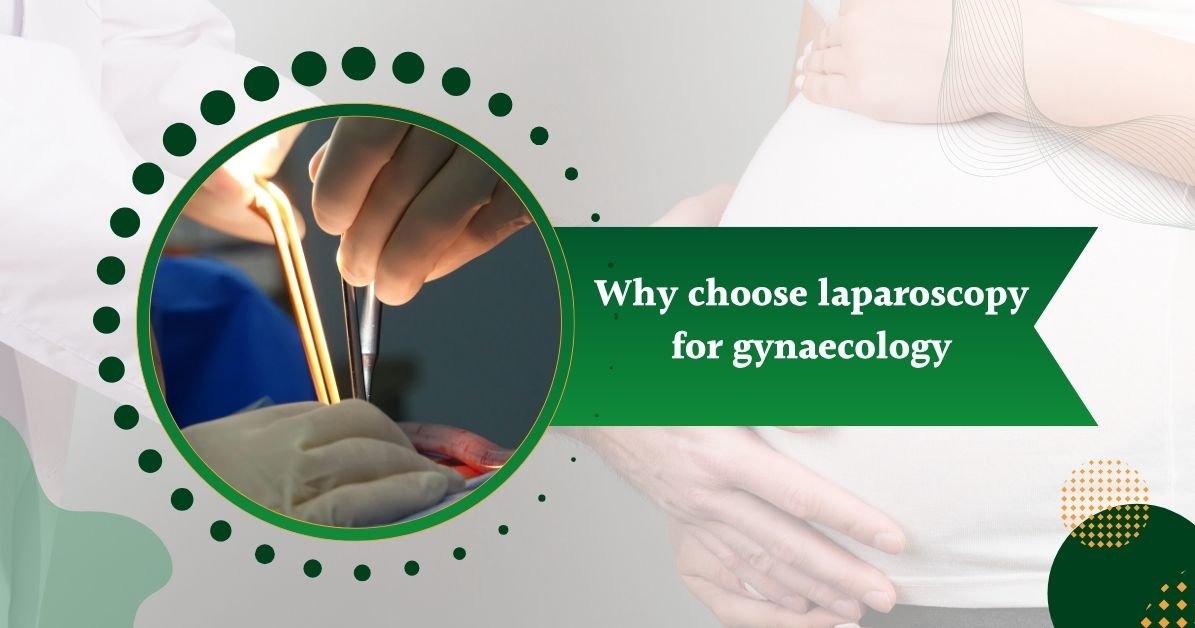
A Modern Approach to Women’s Health
Laparoscopy has transformed the way doctors diagnose and treat various gynaecological conditions. With its minimally invasive nature and faster recovery time, it has become the preferred choice for many women and gynaecologists worldwide.
In this blog, we’ll explore what laparoscopy is, how it works, its benefits, and why it’s a safer, more effective option for many gynaecological procedures.
What is Laparoscopy?
Laparoscopy, often called “keyhole surgery,” is a minimally invasive surgical technique used to examine and treat problems inside the abdomen and pelvis.
Instead of a large incision, the surgeon makes a few small cuts (usually less than 1 cm) and inserts a laparoscope—a thin tube with a camera and light—to view internal organs on a screen.This advanced technology allows doctors to perform complex procedures with high precision and minimal discomfort.
Common Gynaecological Conditions Treated with Laparoscopy
Laparoscopy is used to both diagnose and treat various gynaecological conditions, such as:
- Endometriosis – Removing or destroying abnormal tissue growths.
- Ovarian Cysts – Removing cysts while preserving healthy ovarian tissue.
- Fibroids – Performing myomectomy (removal of fibroids) with minimal bleeding.
- Ectopic Pregnancy – Treating pregnancies that occur outside the uterus.
- Pelvic Inflammatory Disease (PID) – Evaluating and clearing infections.
- Infertility Evaluation – Identifying blockages or abnormalities in fallopian tubes.
Why Choose Laparoscopy Over Traditional Surgery
1️⃣ Minimal Scarring
Laparoscopy requires only small incisions, leaving behind almost invisible scars compared to traditional open surgery.
2️⃣ Faster Recovery Time
Most patients can return to normal activities within a few days instead of weeks, reducing hospital stays and downtime.
3️⃣ Less Pain and Discomfort
Smaller incisions mean less pain and reduced need for pain medications after surgery.
4️⃣ Reduced Risk of Infection
Because the incisions are tiny, the chances of wound infections are much lower.
5️⃣ Better Precision and Visualization
The laparoscope’s magnified view allows surgeons to perform delicate procedures more accurately and safely.
6️⃣ Shorter Hospital Stay
Many laparoscopic surgeries are done as day-care procedures, helping patients recover comfortably at home.
When is Laparoscopy Recommended?
Your gynaecologist may recommend laparoscopy if you have:
- Persistent pelvic pain
- Difficulty conceiving
- Abnormal bleeding
- Ovarian cysts or fibroids
- Unexplained infertility
It can also be used for diagnostic purposes when other imaging methods (like ultrasound or CT scans) don’t provide clear results.
What to Expect During Recovery
After laparoscopy, most patients experience mild discomfort for a few days. You may feel some shoulder pain (from the gas used during surgery), but this resolves quickly. Follow your doctor’s post-surgery advice regarding rest, diet, and wound care for a smooth recovery.
The Future of Gynaecological Care
Laparoscopy has set a new standard in women’s healthcare — offering safety, accuracy, and comfort. It not only reduces physical strain but also supports faster emotional recovery and a better quality of life.If you’re facing a gynaecological issue, talk to your doctor about whether laparoscopic surgery is right for you.