Dr. Manasi Thakur | Gynaecologist In Nagpur | Pregnancy, Delivery | Abortion | Cosmetic Gynecology

Normal Labour | Dr. Manasi Thakur – Zenith Hospital, Nagpur
Labour is termed normal when it:
Begins spontaneously
Occurs at term (after 37 completed weeks)
Involves a singleton fetus in vertex presentation
Results in a minimally assisted vaginal delivery
Has normal maternal and neonatal outcomes
Normal labour is divided into four stages.
First Stage of Labour
The first stage begins with the onset of regular uterine contractions and ends with full dilatation of the cervix (10 cm).
Phases:
Latent Phase:
Cervix dilated <3 cm
Contractions occur every 5–10 minutes
Contractions gradually become stronger and more frequent
Cervical dilatation progresses slowly
Active Phase:
Starts when cervix is 3–4 cm dilated
Dilatation progresses at 0.5–1 cm per hour
Contractions intensify, creating an urge to push (pushing should wait until full dilatation)
Maternal pelvic examination every 4 hours helps assess cervical progress, fetal presentation, and station
Duration:
Average: 5–8 hours
Should not exceed 18 hours in primigravida or 12 hours in multigravida – exceeding this is a red flag requiring intervention
Management:
Continuous reassurance and counselling
Monitoring maternal pulse & BP every 4 hours
Regular assessment of uterine contractions
Fetal heart rate monitored after every contraction (normal: 110–160 bpm)
4-hourly pelvic exams
Second Stage of Labour
Begins with full cervical dilatation (10 cm) and ends with the birth of the baby.
Contractions are stronger, occurring every 2–5 minutes, lasting 60–90 seconds
Mother actively bears down to push the baby out
Duration: 2 hours in primigravida, 1 hour in multigravida
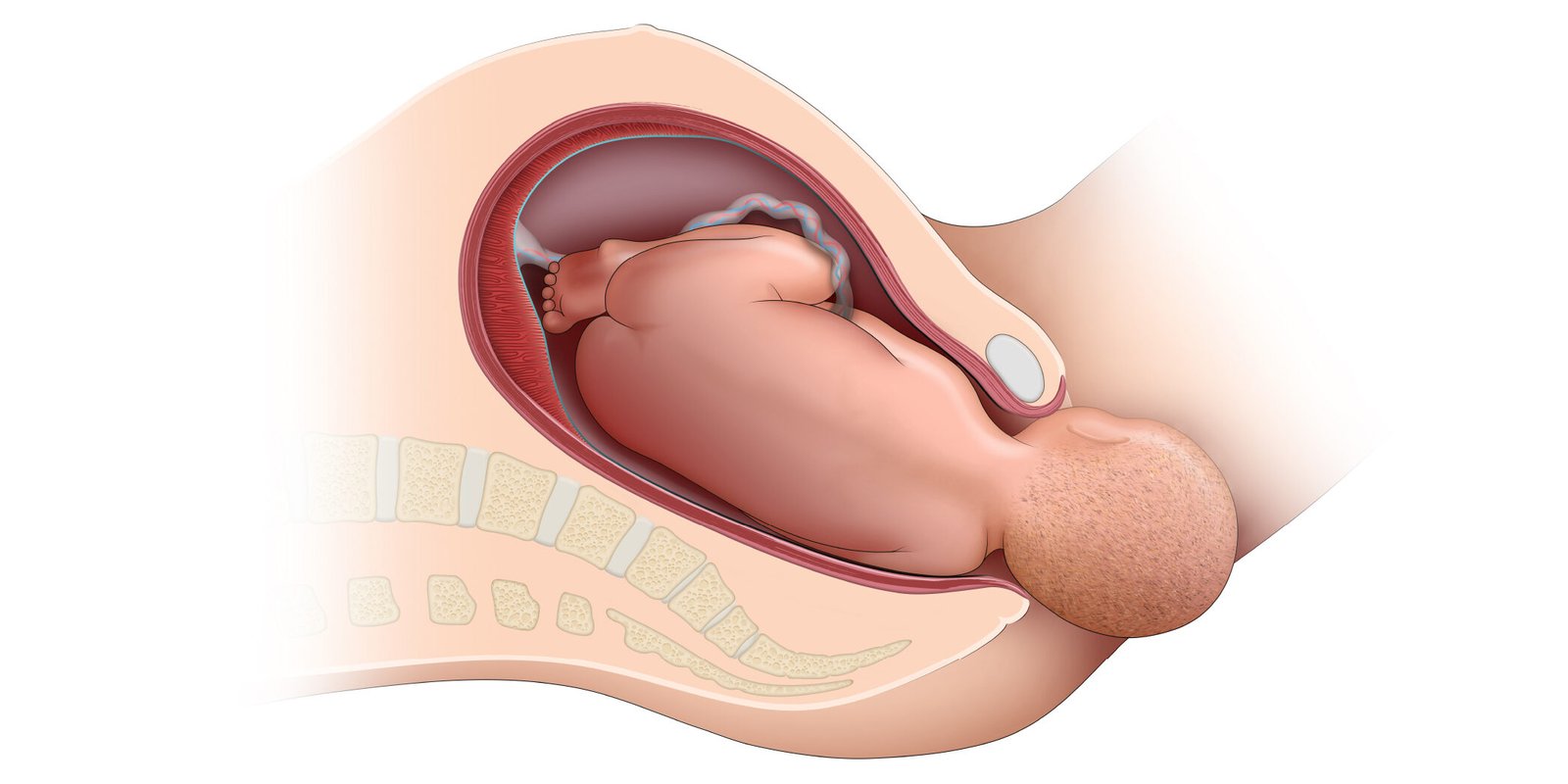
Baby’s head appears first, followed by shoulders, trunk, and legs
Baby usually starts to breathe and cry immediately after birth
Management:
Doctor/nurse provides continuous support and encouragement
Fetal heart rate monitored every 5 minutes
Instrumental delivery if second stage exceeds time limits
Episiotomy under local anesthesia given at crowning if required
Third Stage of Labour
From birth of the baby to delivery of placenta and membranes.
Duration: usually within 5 minutes
Uterine contractions reduce placental bed surface area and prevent hemorrhage
Management – Active Management of Third Stage of Labour (AMTSL):
Oxytocin 10 IU IM with delivery of the anterior shoulder
Controlled cord traction with counter-pressure on uterus
Fundal massage until uterus contracts firmly
Fourth Stage of Labour
Lasts 1 hour after delivery of the placenta.
Close observation of maternal vitals
Monitoring of uterine contractions and vaginal bleeding
This period is critical to detect postpartum hemorrhage (PPH) early and prevent maternal complications