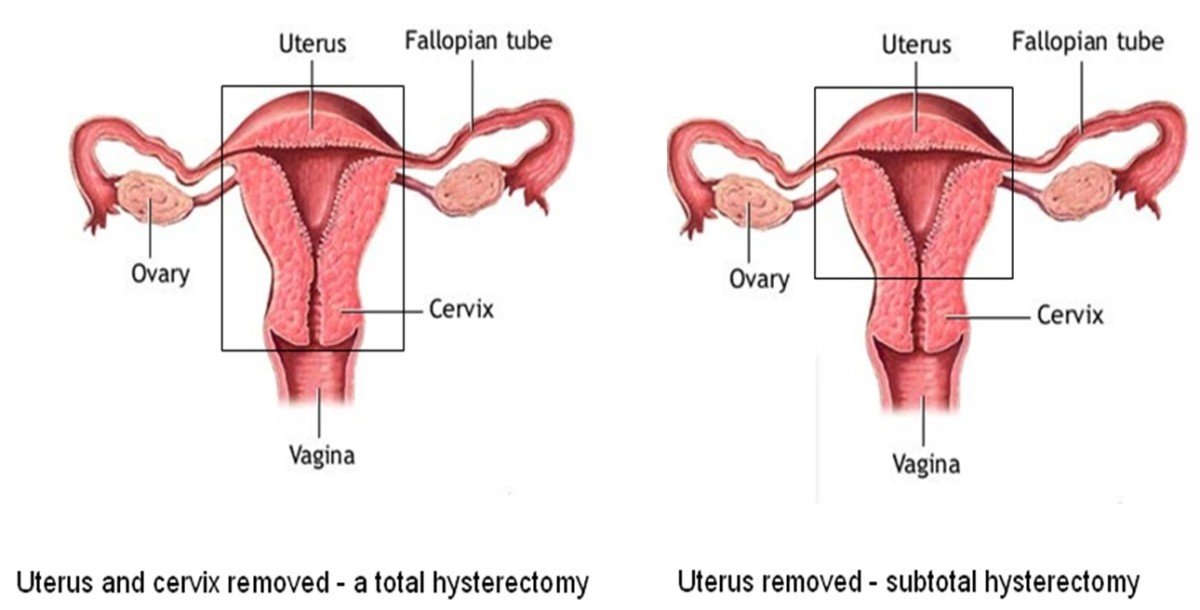
A hysterectomy is a surgical procedure to remove the uterus. It may be recommended for various gynecological conditions, especially when other treatments are not effective.
Common Causes for Hysterectomy
Uterine fibroids causing heavy bleeding and painful periods
Uterine prolapse (uterus slips down into the vaginal canal)
Cancers of the uterus, fallopian tubes, or ovaries
Abnormal or heavy vaginal bleeding
Endometrial hyperplasia
Chronic pelvic pain
Endometrial polyps
Adenomyosis (thickened uterus)
Types of Hysterectomy
Supracervical / Subtotal Hysterectomy – Removes only the upper part of the uterus, leaving the cervix intact.
Total Hysterectomy – Removes the entire uterus along with the cervix.
Total Hysterectomy with Bilateral Salpingo-Oophorectomy – Removes the uterus, both fallopian tubes, and both ovaries, usually in cases of severe disease or cancer.
Surgical Techniques for Hysterectomy
1. Open or Abdominal Hysterectomy
A 10–15 cm incision is made on the abdomen to remove the uterus.
Requires a 2–3 day hospital stay.
Pain and slower recovery compared to laparoscopic methods.
2. Vaginal Hysterectomy
The uterus is removed through the vaginal route.
Often preferred in cases of uterine prolapse.
3. Laparoscopic Hysterectomy (TLH)
A minimally invasive surgery performed using a laparoscope (thin tube with light and camera).
Surgical instruments are inserted through small abdominal cuts.
Faster recovery, fewer complications, and shorter hospital stay compared to open surgery.
Risks of Hysterectomy
Most women recover well after hysterectomy. However, rare complications may include:
Excessive blood loss
Infection at the surgical site
Injury to nearby organs (bladder, bowel, ureters)
Vault prolapse (rare long-term complication)
Expert Care in Nagpur
At Zenith Hospital, Nagpur, under the expertise of Dr. Manasi Thakur, laparoscopic hysterectomy is performed with advanced technology ensuring minimal pain, quick recovery, and maximum safety for patients.